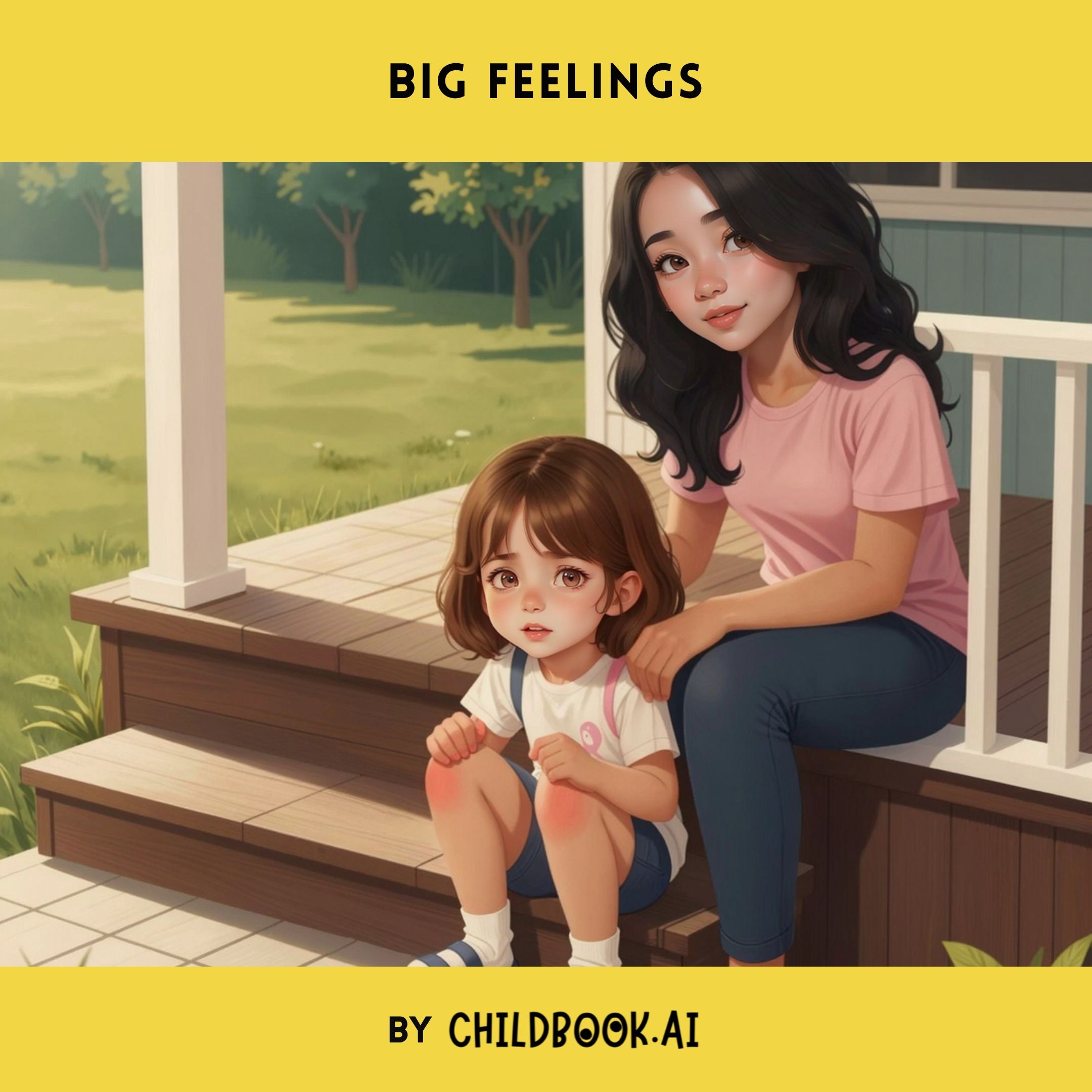

Kit sat on the porch feeling angry. Her face was hot and her hands were tight. Mom came outside and sat down. "Those are big feelings," Mom said gently. "Everyone has them. Your brain is trying to tell you something important." Kit looked up. "Why do feelings feel so BIG?" she asked. Mom smiled. "Let's learn about that together. Big feelings are normal and okay."

Jen ran home from school looking upset. "Kit doesn't like me anymore!" she cried. Mom hugged her. "Tell me what happened," Mom said. "Kit didn't wave at me today," Jen explained. Mom nodded kindly. "Sometimes our brains make guesses that aren't right. Maybe Kit didn't see you. Our brains try to help us, but they can make mistakes about what things mean."

Mom drew a picture of a brain. "Your brain works very fast," she explained to Jen and Kit. "It tries to guess what's happening before you have all the information." Kit's eyes widened. "Like when I thought Ben ate my cookie, but it was still in my backpack?" Mom laughed. "Exactly! Your brain made a quick guess. Quick guesses help us sometimes, but not always."

Kit felt her face get hot again. "I WAS upset this morning! I couldn't find my homework!" she told Jen. "That's why I didn't wave. I wasn't mad at you." Jen's eyes got big. "Oh! I thought you were ignoring me." Mom smiled. "See? When we have big feelings, they can take over our whole brain. Then we don't notice other things happening around us."

"What should I do when I have big feelings?" asked Jen. Mom thought carefully. "First, notice the feeling. Then, ask questions before deciding what it means." Kit nodded. "Like asking, 'Are you okay?' instead of thinking someone is mad?" "Perfect!" said Mom. "Asking questions gives your brain more information. Then it can make better guesses about what's really happening." Ben wagged his tail in agreement.

Kit and Jen sat on the grass with Ben between them. "I make mistakes all the time," Kit admitted quietly. "Me too," said Jen. Mom joined them. "Everyone's brain makes mistakes. Adults too! I thought Dad was upset yesterday, but he was just thinking hard about work. Even moms misunderstand things sometimes. Making mistakes helps us learn and grow."

"When big feelings come, try this," Mom said. She took a slow, deep breath. Kit and Jen copied her. "Breathing slowly tells your brain to calm down," Mom explained. They breathed together three times. "I feel better," Kit said softly. "Me too," Jen agreed. "Deep breaths give your brain time to think clearly. They help big feelings get smaller," Mom said. Even Ben seemed calmer.

"Words are powerful tools," Mom told the girls. "When you feel upset, use words to explain." Kit practiced. "I feel frustrated when I can't find my things." "Good!" Mom said. Jen tried next. "I feel sad when my friend doesn't wave." Mom hugged them both. "Perfect! Using feeling words helps others understand you. Then they can help fix the misunderstanding together."

Jen walked over to Kit. "Hey Kit, are you okay? You seemed upset this morning." Kit smiled. "Thanks for asking! I was stressed about homework, not mad at you." They hugged. "I'm glad we talked," Jen said. Mom watched proudly. "See how checking in helps? You found out the truth instead of guessing. Now you both feel better and your friendship is stronger."

"What if we already had a misunderstanding?" Kit asked. "You can fix it!" Mom said. "Say sorry if needed. Explain what really happened. Listen to each other." Kit turned to Jen. "I'm sorry I didn't wave." "I'm sorry I thought you were mad," Jen replied. They smiled at each other. "Fixing things together makes friendships stronger," Mom said. Ben barked happily.

Mom gathered everyone together. "Let's remember what we learned about big feelings." Kit said, "Our brains make quick guesses that can be wrong." Jen added, "We should ask questions instead of guessing." "And take deep breaths!" Kit said. "And use our words," Jen continued. Mom smiled warmly. "You've both learned so much. Big feelings are okay. We can handle them together."

The sun was setting as Mom, Kit, Jen, and Ben sat together. "I'm not scared of big feelings anymore," Kit said. "Me neither," Jen agreed. Mom hugged them both close. "Big feelings are part of being human. They're not bad. They help us understand ourselves and each other better. When we work together and communicate, we can handle any feeling that comes our way."
--:--
--:--
0/12