
Charlie loved to learn. Every day, he went to Alice Kinnian's class to practice reading and writing. "I want to be smart," Charlie told Alice with a big smile. Alice smiled back. "You are already special, Charlie," she said kindly. Charlie worked hard on his letters. He wanted to read books and understand big words. Alice believed in him. That made Charlie very happy.

One day, Alice had exciting news. "Charlie, meet Dr. Strauss," she said. Dr. Strauss had kind eyes and wore a white coat. "We have a special program that might help you learn faster," Dr. Strauss explained. Charlie's eyes grew wide. "Really?" he asked. Dr. Strauss nodded. "First, we need to see if it's safe. We tried it with a mouse named Algernon." Charlie felt hopeful and nervous.

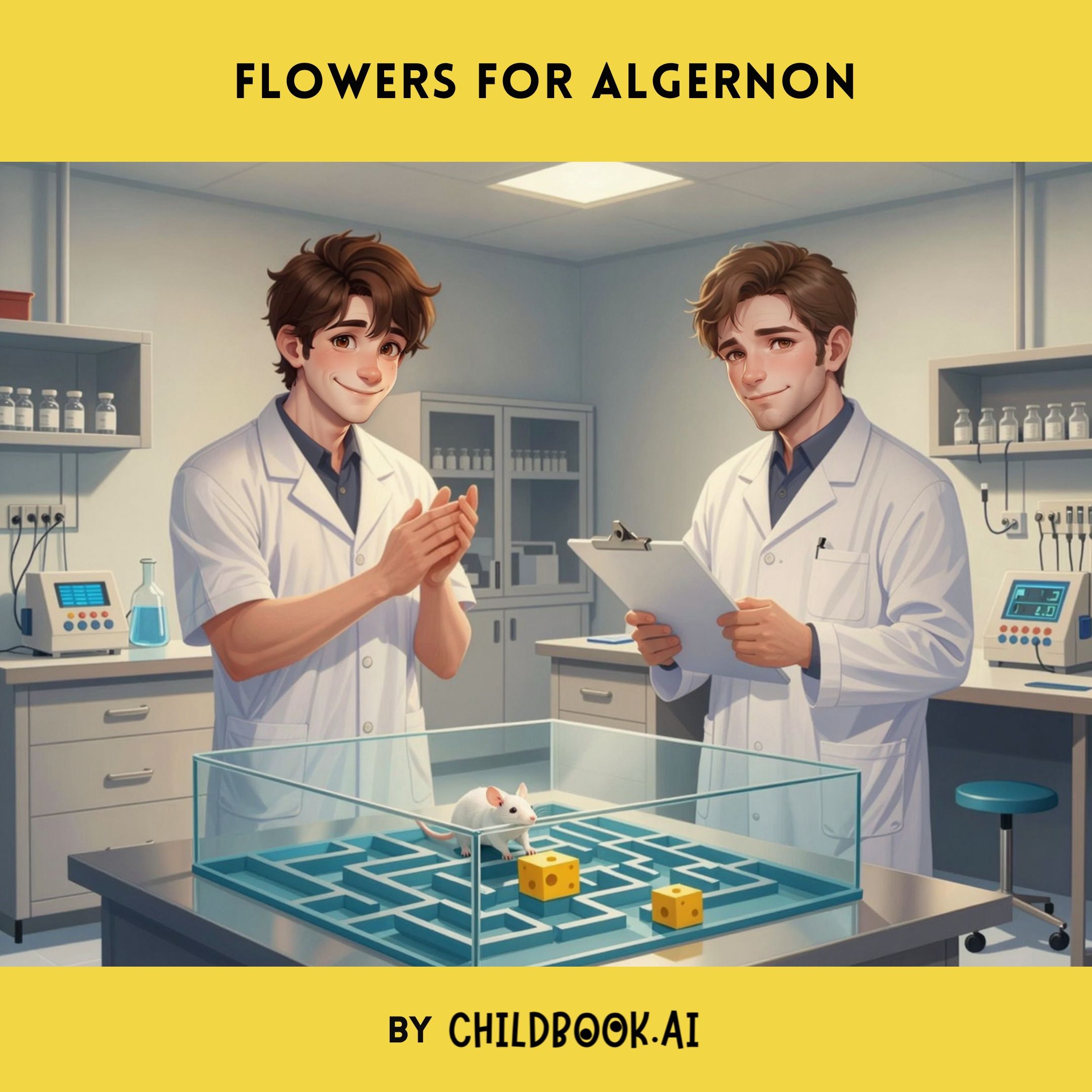
Dr. Strauss showed Charlie a small white mouse in a cage. "This is Algernon," he said. The mouse ran through a maze very quickly. "Wow! He's so fast!" Charlie said, clapping his hands. Algernon found the cheese at the end easily. "Algernon had the same treatment we want to give you," explained Dr. Strauss. Charlie watched the clever mouse. "Can I really be smart like Algernon?" he asked hopefully.

Charlie thought about the special treatment. Alice sat with him. "You don't have to do this, Charlie," she said gently. "But I want to learn more," Charlie replied. Dr. Strauss explained it might not last forever. "I understand," said Charlie. "I still want to try." Alice held his hand. "You're very brave," she told him. Charlie smiled. He was ready for his big chance.

After the treatment, Charlie started noticing changes. Words became easier to read. Numbers made more sense. "Look, Alice! I finished the whole page!" Charlie said proudly. Alice's eyes sparkled with joy. "You're doing wonderfully," she encouraged him. Dr. Strauss checked on Charlie often. "How do you feel?" he asked. "I feel like my brain is waking up," Charlie answered. Everything seemed brighter and clearer now.

Charlie read books he never understood before. He solved puzzles quickly. He even helped Alice with classroom tasks. "You've learned so much, Charlie," Alice said warmly. But Charlie noticed something strange. "Why do people seem different now?" he asked. Alice looked sad. "Maybe you're seeing things you didn't notice before," she explained gently. Charlie felt confused but kept learning. Algernon still ran his mazes perfectly.

Charlie decided to visit his mother, Rose Gordon. He hadn't seen her in years. "Hello, Mom," he said nervously. Rose looked at him carefully. "Charlie? You seem different," she said. "I've been learning a lot," Charlie explained proudly. Rose's eyes filled with tears. "I always wanted you to do well," she whispered. Charlie hugged her. "I know, Mom," he said softly. It felt good to see her again.

One day, Dr. Strauss looked worried. Algernon wasn't running his mazes well anymore. The little mouse seemed confused and slow. "What's wrong with Algernon?" Charlie asked, concerned. "We're not sure yet," Dr. Strauss said quietly. Charlie felt scared. "Will the same thing happen to me?" he wondered. Alice tried to comfort him. "We don't know, Charlie," she said honestly. Charlie decided to enjoy every moment while he could.

Charlie spent more time with Alice. "You've always been kind to me," he told her. "Even before I got smart." Alice smiled warmly. "Because you have a good heart, Charlie," she said. "That never changed." Charlie realized something important. Being smart helped him learn, but having friends who cared mattered more. "Thank you for always believing in me," Charlie said. Alice hugged him. "Always," she promised.

Algernon became very sick. Charlie visited him every day. He brought the little mouse special treats. "You were very brave, Algernon," Charlie whispered. The small white mouse didn't run mazes anymore. One morning, Algernon was gone. Charlie felt very sad. Dr. Strauss put a hand on his shoulder. "Algernon helped us learn important things," he said gently. Charlie nodded, tears in his eyes. "I'll always remember him."

Charlie started to feel changes in himself too. Reading became harder again. But he wasn't as scared anymore. "Alice, I want to tell you something," Charlie said. "Being smart was nice, but having friends like you is better." Alice hugged him tight. "You taught everyone so much, Charlie," she said. Charlie smiled. "I learned that being kind is the most important thing." He felt peaceful and happy.

Charlie returned to Alice's class. He worked on his letters again, just like before. "I'm glad you're here, Charlie," Alice said warmly. Charlie smiled his biggest smile. "Me too," he said. Dr. Strauss visited sometimes to check on him. Rose came to see him more often. Charlie had his friends around him. He remembered his special time being smart, but he knew something better. Love and kindness were the greatest gifts of all.