
Long ago, the Kalaharian Kingdom was beautiful. Green grass covered the land. Rivers flowed and lakes sparkled in the sun. Koning Goera I sat on his golden throne and smiled. "Bring the treasure chests," he said to his helpers. The people gathered in the palace courtyard. The king gave gold coins to everyone. "This belongs to all of us," he said kindly. Children played by Goera Lake. Families sang happy songs. Everyone loved their generous king. The kingdom was filled with joy and peace.

One morning, Koning Goera I felt very tired. He called his brother, Prins Hakseen, to his bedside. "I am growing old and weak," the king whispered. "You must be the next king. You are wise and good." Prins Hakseen held his brother's hand. "I will care for our people," he promised. The king also called his son, Prins Goera. "Your uncle will make a wonderful king," he told him. But Prins Goera frowned and said nothing. Soon after, the beloved king closed his eyes forever. The kingdom mourned.

Prins Goera stood before the palace. "I should be king, not my uncle!" he shouted. Prins Hakseen tried to reason with him. "Your father wanted peace," he said gently. But Prins Goera would not listen. He gathered soldiers and declared war. The battle was fierce but quick. Prins Hakseen did not want his people to suffer, so he surrendered. Prins Goera placed the crown on his own head. "I am now Koning Goera II!" he announced proudly. The people watched quietly, their hearts filled with worry.

Koning Goera II was very different from his father. "All the gold is mine!" he declared. He locked the treasure in his own rooms. When people asked for help, he turned them away. "Go work harder!" he would say. The king wore fancy robes and ate huge feasts alone. His palace grew full of riches while the people grew poor. But the king had a secret. He was afraid of being alone. "Stay near me!" he ordered his servants. He could not even dress himself without help.

One day, an old man with a long gray beard appeared at the palace gates. It was Die Profeet from Great Awas Lake. The guards brought him before the king. "The gods have sent me," Die Profeet said in a strong voice. "You must share your wealth with your people." Koning Goera II laughed rudely. "I will do what I want! Who are you to tell me anything?" Die Profeet's eyes grew sad. "If you do not change, terrible things will happen," he warned. The king waved him away. "Leave my palace!"

The next morning, the sun burned hotter than ever before. Day after day, it blazed down on the kingdom. The rivers began to shrink. Goera Lake grew smaller and smaller. Great Awas Lake started to dry up. The green grass turned brown and died. "Please, we need water!" the people cried to the king. But Koning Goera II stayed in his cool palace. "I have plenty of water," he said, not caring about his people. The beautiful lakes became white salt pans. The kingdom was changing into something terrible.

Dark clouds gathered in the sky, but they brought no rain. Instead, a mighty wind began to blow. Sand rose into the air like angry spirits. "A sandstorm is coming!" people shouted as they ran for shelter. The wind howled louder and louder. Sand covered everything—the grass, the houses, the dried-up lakes. For days, the storm raged. When it finally stopped, the kingdom had vanished. In its place was a vast desert. The beautiful Kalaharian Kingdom had become the Kalahari Desert. Everything was gone.

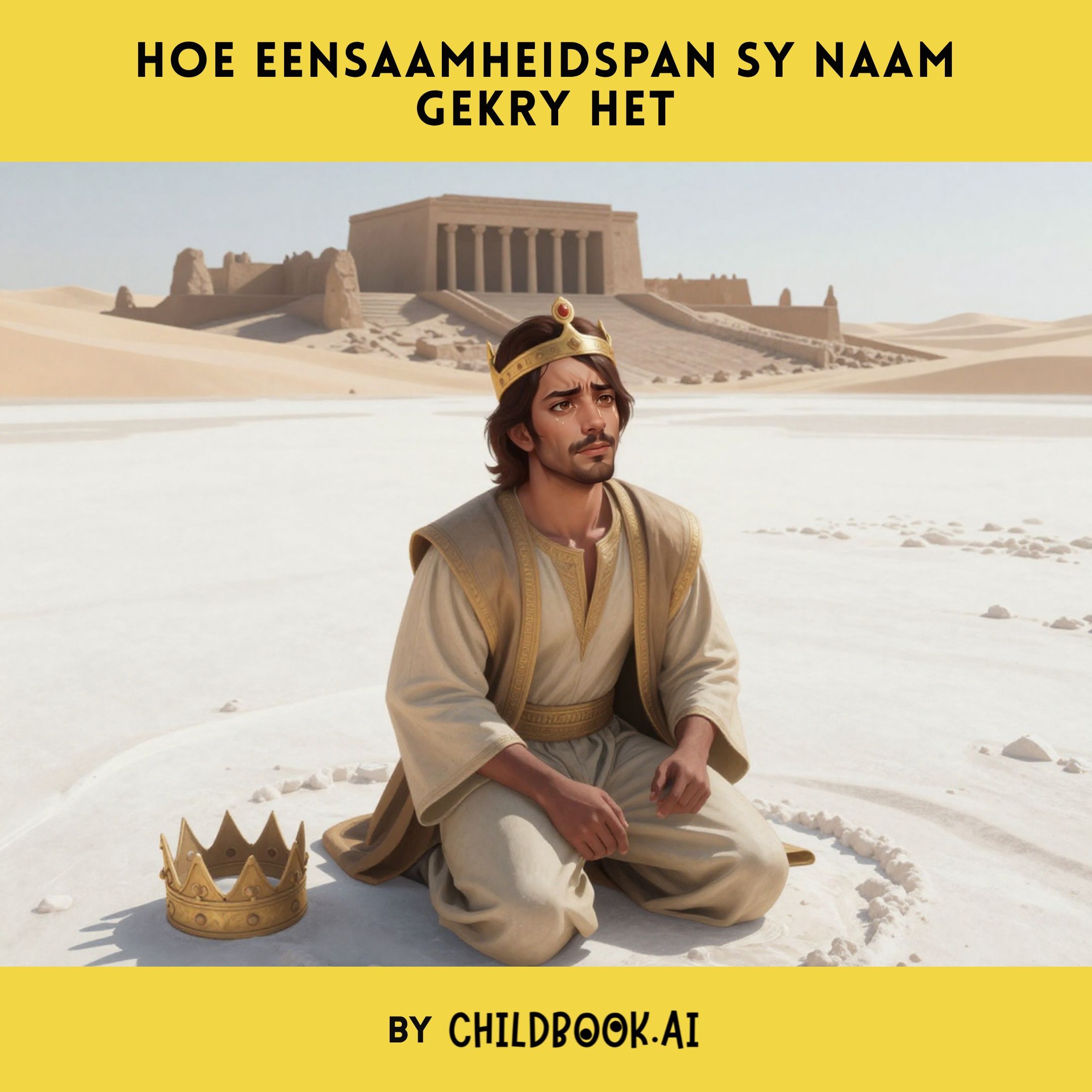
Koning Goera II stood alone on the empty salt pan that was once Goera Lake. His palace was buried in sand. His people had scattered far away. All his gold had disappeared. "I am all alone," he cried. "I cannot even care for myself!" He remembered Die Profeet's warning. He thought of his kind father. He understood too late what he had done. The salt pan where he stood became known as Eensaamheidspan—the Pan of Loneliness. And that is how it got its name, a reminder to always share and be kind.