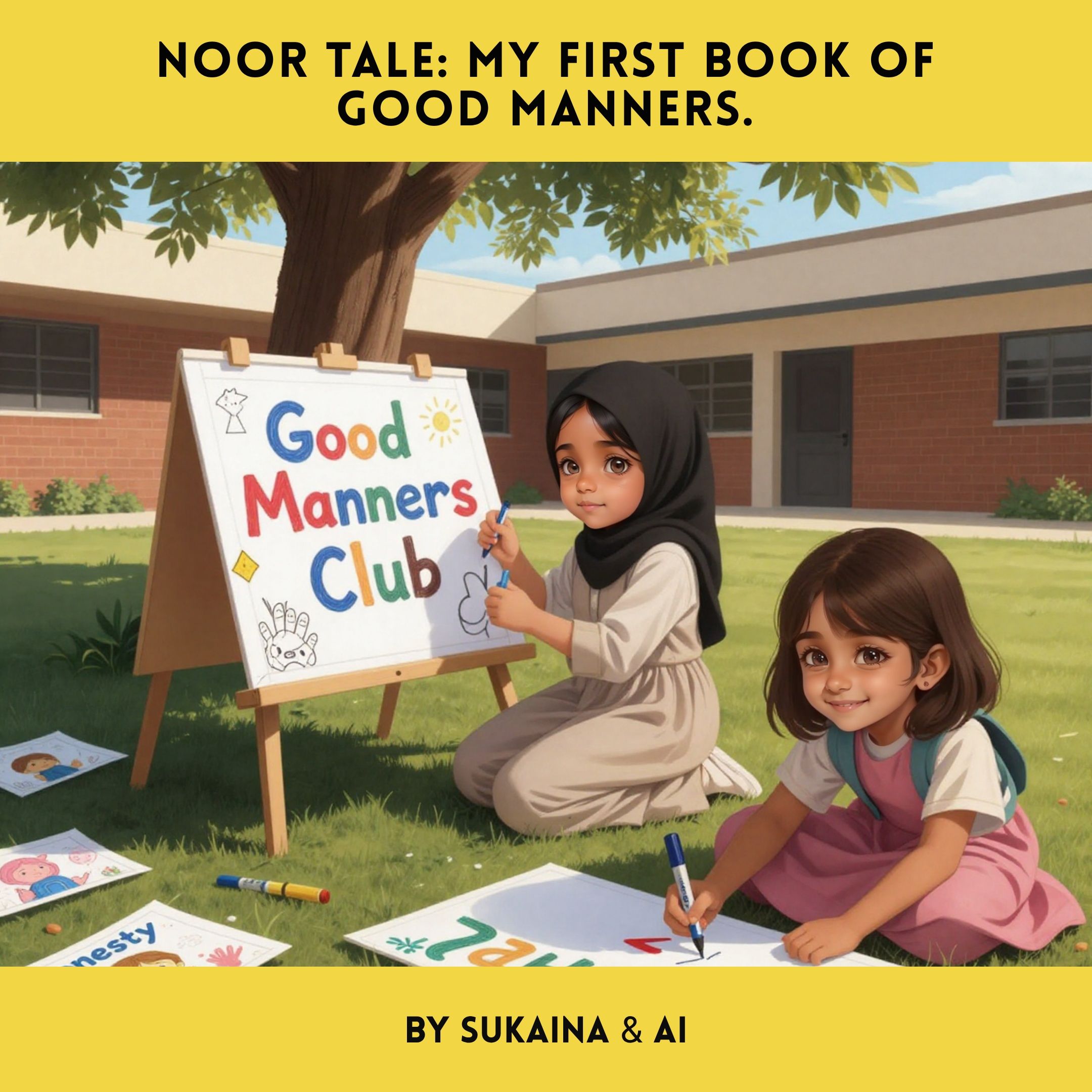

Sukaina loved her mother's special cookies. One day, she ate three cookies before dinner. When Mama asked who ate them, Sukaina felt scared. She remembered the story of young Mohammad, who was called 'Al-Amin' meaning 'the truthful one.' Even when it was hard, he always told the truth. Sukaina took a deep breath. 'I ate them, Mama. I'm sorry,' she said. Mama hugged her. 'Thank you for being honest, my dear. That takes courage!'

The next day at school, Sukaina's friend dropped her pencil box. Pencils scattered everywhere. Sukaina picked up a beautiful sparkly eraser. She wanted to keep it so badly! But then she remembered being honest yesterday felt good. 'Here's your eraser,' Sukaina said, giving it back. Her friend smiled brightly. 'Thank you, Sukaina! You're such a good friend.' Sukaina felt happy inside. Being honest was better than keeping the pretty eraser.

Batool saw old Mrs. Patel struggling with heavy grocery bags. Batool remembered how Prophet Mohammad always helped everyone, even those who weren't kind to him. 'Can I help you, Mrs. Patel?' Batool asked sweetly. Mrs. Patel's face lit up with joy. 'Oh, thank you, dear child!' Together they carried the bags upstairs. Mrs. Patel gave Batool a warm hug. 'Your kindness made my day so much better,' she said with tears of happiness.

One afternoon, Sukaina and Batool found a tiny injured bird in the park. Its wing looked hurt. 'We must help it!' said Batool. They remembered that Prophet Mohammad taught kindness to all creatures, big and small. Carefully, they placed the bird in a soft box with water. Sukaina's father took them to a vet. Two weeks later, they released the healed bird. It flew away singing. 'We did something good today,' smiled Sukaina.

It was Sukaina's birthday party. The table overflowed with delicious food: biryani, kebabs, samosas, and sweets. Sukaina wanted everything! Her grandmother told her about Prophet Mohammad. 'He never wasted food, even a single date,' Grandma said. 'He taught us to take only what we can eat.' Sukaina took smaller portions. She could always get more if hungry. At the end, very little food was wasted. Everyone was happy and full!

At lunch, Batool didn't like her vegetables. She wanted to throw them away. Her mother stopped her gently. 'Prophet Mohammad taught us that wasting food is wrong. Somewhere, children have no food at all.' Batool felt sad thinking about hungry children. She tried one bite of vegetables. They weren't so bad! She ate them all. 'I'm proud of you,' said Mama. Batool felt proud too. She wouldn't waste food again.

Sukaina was playing and accidentally bumped into her brother Husain. 'Watch it!' she shouted angrily. Papa who watched all this, sat down with her. He reminded Sukaina how 'Prophet Mohammad was always gentle and polite, even when others weren't kind to him. He used beautiful words.' Sukaina thought about this. She found her brother. 'I'm sorry I yelled. Please excuse me,' she said politely. Her brother smiled. 'It's okay! Thank you for apologizing.' Kind words made everything better!

Batool was busy playing when her grandmother called her. 'Not now, I'm busy!' Batool replied. Her grandfather looked sad. Mama took Batool aside. 'Prophet Mohammad showed great respect to elders. He always listened to them with love and patience.' Batool felt terrible. She ran to Grandma and Grandpa. 'I'm so sorry. How can I help you?' she asked respectfully. They hugged her warmly. Showing respect and using kind words made her grandparents very happy.

Sukaina rushed to eat her snack without washing her hands. 'Stop!' said Mama. 'Your hands are dirty from playing outside.' Mama told her that Prophet Mohammad said cleanliness is part of faith. He always washed his hands before eating. Sukaina looked at her dirty hands. They had sand and dirt on them! She washed them carefully with soap. Now her hands were clean and her food stayed healthy. Cleanliness kept her safe!

Batool's room was very messy. Clothes everywhere, toys scattered, books piled up. She didn't want to clean it. Her father said, 'Prophet Mohammad taught us to keep our spaces clean and organized. A clean place brings peace to our hearts.' Batool started picking up slowly. Sukaina came to help her friend. Together, they organized everything. When finished, the room looked beautiful! 'I feel so much better now,' said Batool, smiling at the tidy space.

Every morning, Sukaina and Batool practiced good hygiene together. They brushed their teeth after breakfast. They combed their hair neatly. They wore clean clothes. They washed their hands before eating and after playing. 'Prophet Mohammad taught that being clean shows we care about ourselves and others,' said Sukaina's mother. The girls felt fresh and happy. Their good habits made them healthy and strong. Other children wanted to be like them too!

Activity One: Draw yourself being honest. Activity Two: Do three kind acts this week and tell someone about them. Activity Three: At dinner, take only what you can eat. Activity Four: Practice saying 'please,' 'thank you,' and 'excuse me' ten times today. Activity Five: Make a cleanliness checklist: brush teeth, wash hands, clean room. Sukaina and Batool learned that good manners make everyone happy. Remember, small good actions lead to big beautiful changes. Keep practicing every single day!
--:--
--:--
0/12