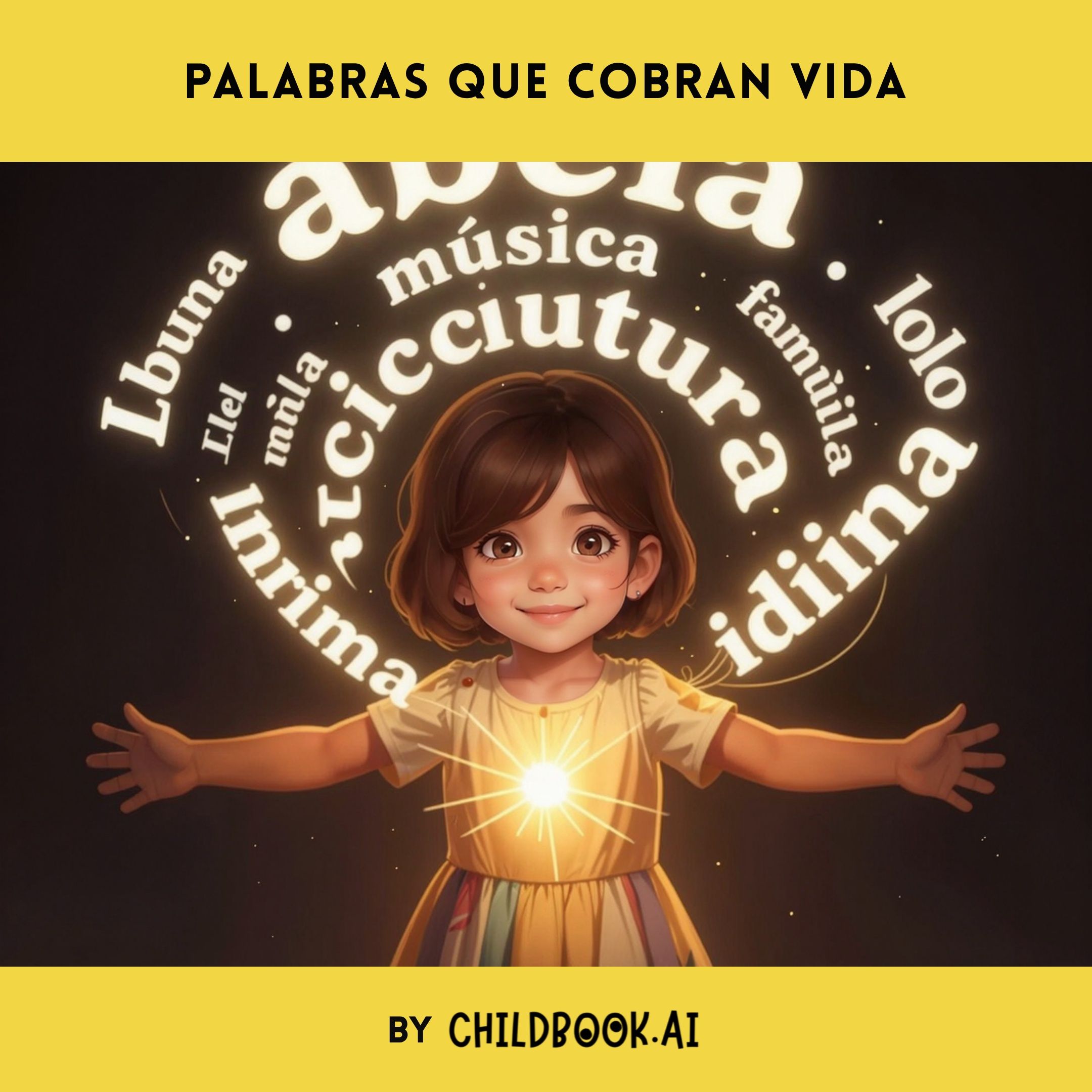

My name is Sofía. I live in Atlanta. I'm seven years old. At school, I speak English. With friends, I speak English. At home, my mom speaks Spanish to me. But I always answer in English. It's just easier. I don't really think Spanish matters much. One afternoon, I was reading my favorite book. Suddenly, a word started glowing: abuela. The letters lifted right off the page! "Come with me," the word whispered. Before I could say anything, everything went bright.

I blinked. I was in a warm kitchen. It smelled amazing—like sweet bread and spices. My abuela stood at the counter. "Sofía, ven," she called gently. I walked closer. She was making tamales, her hands working the masa. "Esta receta viene de mi mamá," she said softly. "Y de su mamá también." I watched her careful movements. This wasn't just cooking. This was something more. This was history, passed down through her hands. I'd never noticed before.

Suddenly, the kitchen disappeared. I was back in my room in Atlanta. But now I heard music—salsa, reguetón, sounds I'd heard before but never really listened to. The word música floated in front of me, glowing gold. "Latin music mixes African, Indigenous, and European influences," a voice explained. I closed my eyes and really listened. The drums, the guitars, the voices—they all told stories. Wait, I thought. Music has history too? Everything around me seemed to glow with meaning.

The music faded. New words appeared: cultura latina. I'd always thought that meant one thing—one story, one way of being. But now I saw something different. Images swirled around me: different foods, different dances, different flags. "No somos todos iguales," the words whispered. We are not all the same. Colombian stories. Mexican stories. Puerto Rican stories. Each one unique. Each one important. I realized I'd been thinking too small. Being Hispanic wasn't just one story. It was many, many stories woven together.

Another word glowed: migración. I saw suitcases being packed. Families saying goodbye, leaving their homes. But they weren't leaving everything behind. They brought their music, their recipes, their stories with them. They brought their language. I saw them in new places, cooking familiar foods, singing familiar songs. They didn't lose who they were. They transformed, carrying their culture forward. The word migración pulsed gently. It meant loss, yes. But also hope. Also keeping your heart's home alive, no matter where you go.

The scene shifted again. Now I saw big family gatherings. Tables full of food. Cousins playing. Tías laughing. Abuelos telling stories. The word familia glowed warm and bright. It wasn't just about people related by blood. It was about connection. It was about belonging. I thought about my own family. Mom speaking Spanish. Abuela's tamales. Sunday visits. I'd been there, but not really paying attention. Now I understood. Familia meant home. It meant being part of something bigger than yourself.

A new word appeared: idioma. Language. I used to think Spanish didn't matter for me. English was enough. But now the word idioma opened like a door. Spanish carries memories. It carries jokes only certain people understand. It carries the way my abuela says my name. It carries history. All those times Mom spoke Spanish to me—she was giving me a gift. A key to unlock stories, feelings, connections. I just hadn't been ready to use it. Until now.

More words appeared, but these were different. "Voy al store." "Te llamo later." English and Spanish mixed together. Spanglish! I'd heard people talk like this. Some people said it was wrong. But now I understood. It wasn't wrong at all. It was living between two worlds. It was being creative with language. It was making something new while honoring both parts of yourself. The words danced together, happy and free. Spanglish was its own kind of magic.

All the glowing words swirled around me—abuela, música, cultura, familia, idioma. They spun faster and faster. Then they settled into my heart. Something changed inside me. I stopped trying to translate everything in my head. I just understood. Spanish words didn't feel foreign anymore. They felt like mine. Like they'd always been mine, waiting for me to claim them. I took a deep breath. The words glowed once more, then gently faded. But they didn't disappear. They stayed inside me.

I was back in my regular room, my book in my lap. Had it been a dream? It felt so real. I heard Mom in the kitchen. I walked downstairs slowly. She was making rice, humming softly. My heart beat fast. I took a breath. "Mami," I said, "¿me pasas el arroz?" The Spanish words came out easily, naturally. Mom turned around. Her eyes got wide. Then she smiled—the biggest, warmest smile I'd ever seen. "Sí, mi amor," she said. And I smiled back.

After that day, everything felt different. Spanish wasn't a stranger language anymore. It was mine. At dinner, I practiced. "¿Cómo estuvo tu día?" I asked Mom. She lit up every time. We started mixing English and Spanish together. "I need to do my homework, pero después podemos leer." It felt natural. It felt right. I wasn't choosing between English and Spanish anymore. I was choosing both. They were both part of me. Two languages, one heart.

Now I know the truth. Spanish isn't just a language—it's a key. It opens doors to stories, memories, and connections I never knew I had. Being Hispanic isn't one single story. It's thousands of stories, all different, all important. And my story includes all of it. English at school. Spanish with Abuela. Spanglish with Mom. Every word I speak carries a piece of who I am. When I speak now—in any language—my words come to life. And that's the most magical thing of all.