

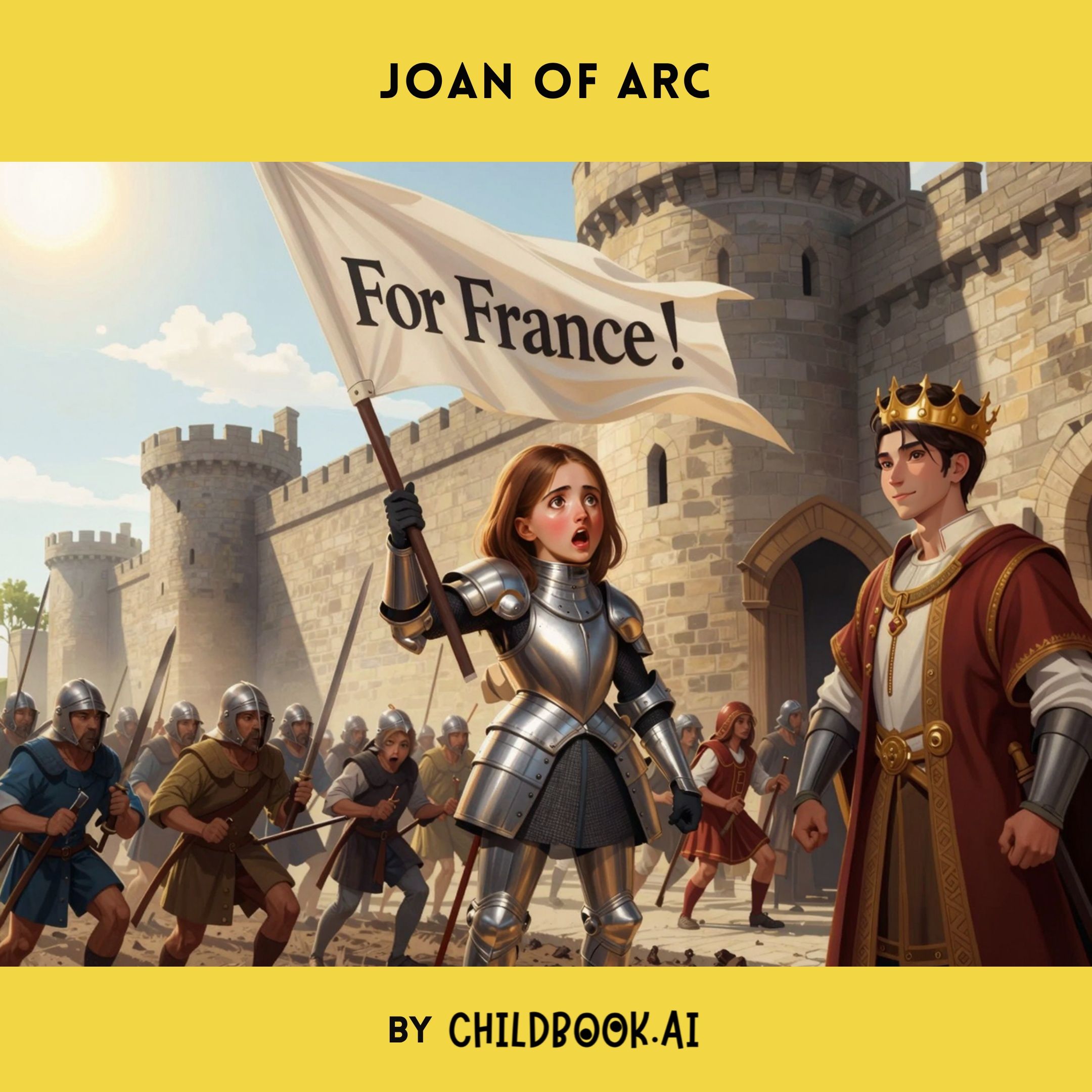

In a small French village, thirteen-year-old Joan tended sheep and prayed each day. One quiet afternoon, she heard a gentle voice. "Joan," it whispered, "help France and your king." She trembled but felt warm inside. "I will try," she said softly. Joan packed a small bag, said goodbye to her family, and began a long journey toward the king's soldiers, her heart full of hope and faith that she could make a difference.

When Joan reached the army camp, soldiers laughed at the small girl asking to help. "I have been sent to help France," she said bravely. Charles VII, curious about her courage, agreed to let her try. Wearing armor too big for her, Joan rode toward Orléans, a city under siege. "Stay close and be brave," she told the soldiers. Her calm voice and confidence gave the tired men new hope for the difficult battle ahead.

At Orléans, Joan raised her banner high and shouted, "For France!" The soldiers cheered and followed her without fear. Together, they pushed back the enemy and freed the city. Charles VII thanked Joan with a warm smile. "You have saved us," he said. Soon after, Joan stood proudly beside him at his coronation in Reims, watching him become king, knowing her faith and courage had helped bring peace to her beloved country.

Later, Joan was captured by enemies who did not believe her story. During her trial, she stayed calm and said, "God and the saints guided me." Even when frightened, she never stopped believing in her mission. Joan's courage inspired people across France for many years afterward. Today, children still learn about the brave girl who listened to her heart, helped her king, and became a lasting symbol of faith and bravery.